
The short answer
The best pressure washing website examples make five things obvious within seconds: what you clean, where you work, why you are credible, how the work looks, and how to request a quote. Instead of copying one contractor's design, study these 15 proven page concepts. A local one-page site fits a new operator, while a multi-page service-area site gives an established company more room to rank and sell. In every case, favor fast mobile pages, real job photos, specific services, and one clear quote action.
Key takeaways
- Pick a website structure that matches your current services, market, and lead volume.
- Put your service, location, proof, and quote button near the top of every important page.
- Use real project photos and specific service pages instead of filler text and stock-heavy layouts.
- Treat mobile speed, local search pages, reviews, and quote forms as working sales tools.
- A simple focused site usually beats a crowded design that makes homeowners hunt for answers.
The best pressure washing website is clear before it is impressive
Your best model is a fast, mobile-first site built around one clear quote path. It should show your service, coverage area, proof, and contact option without making the customer dig.
That verdict matters because a contractor website is not an art project. It has to turn local traffic into calls and estimate requests.
The stakes are real. IBISWorld counted 32,193 pressure washing service businesses in the US as of 2024, which was 5.2 percent more than in 2023. A generic site gives a homeowner little reason to choose you over another operator.
Mobile cannot be an afterthought. Pew Research Center reported that 91 percent of US adults owned a smartphone in 2025, while 16 percent relied on a smartphone instead of home broadband for internet access. Your phone layout may be the only version some prospects see.
Speed also affects the chance of getting an inquiry. Portent's 2022 study found that a website loading in one second had a conversion rate three times higher than one loading in five seconds. Keep oversized videos, heavy sliders, and unnecessary plug-ins under control.
Before choosing a layout, review what makes a good pressure washing website. That checklist helps separate useful sales elements from visual clutter.
These 15 website examples solve different contractor problems
The 15 examples below are practical website formats, not a ranked list of named companies. Use them as blueprints, then fit the structure to your operation and market.
A solo operator does not need the same site as a multi-crew commercial contractor. The useful question is not which example looks coolest. Ask which one makes your next customer understand and trust your offer fastest.
Each format has a tradeoff. Small sites are easier to maintain, while larger sites can explain more services and target more searches. More pages only help when each page has a clear job.
If you are deciding how the site should be built, compare pressure washing website templates versus custom websites. The build method should support the format, not dictate it.
| Example | Website format | What it does well | Best fit |
|---|---|---|---|
| 1 | Local one-page site | Explains one core offer and drives one quote action | New solo operator |
| 2 | House-wash specialist | Builds the entire message around siding and exterior washing | Residential specialist |
| 3 | Service-card homepage | Lets visitors scan several cleaning options quickly | General residential company |
| 4 | Before-and-after portfolio | Makes visible results the main proof | Operator with strong job photos |
| 5 | Review-led homepage | Places customer feedback close to calls to action | Established local company |
| 6 | Instant-estimate funnel | Moves ready buyers directly into quote questions | Company with consistent pricing rules |
| 7 | Call-first mobile site | Keeps tap-to-call access visible throughout the page | Owner answering calls directly |
| 8 | Multi-service residential site | Gives each service its own explanation and page | Growing residential operator |
| 9 | Roof soft-wash specialist | Separates low-pressure treatment from surface pressure washing | Roof-focused contractor |
| 10 | Driveway and concrete specialist | Shows surface-specific work and straightforward scope details | Concrete-heavy route |
| 11 | Commercial capability site | Explains property types, scheduling, and estimate process | Commercial contractor |
| 12 | Property-manager landing page | Speaks to recurring work and multi-site coordination | B2B account growth |
| 13 | City-page service-area site | Connects services with distinct local markets | Multi-city company |
| 14 | Educational authority site | Answers customer questions before asking for the lead | Operator investing in search |
| 15 | Seasonal campaign landing page | Matches one promotion or service to one audience | Paid ads or seasonal pushes |
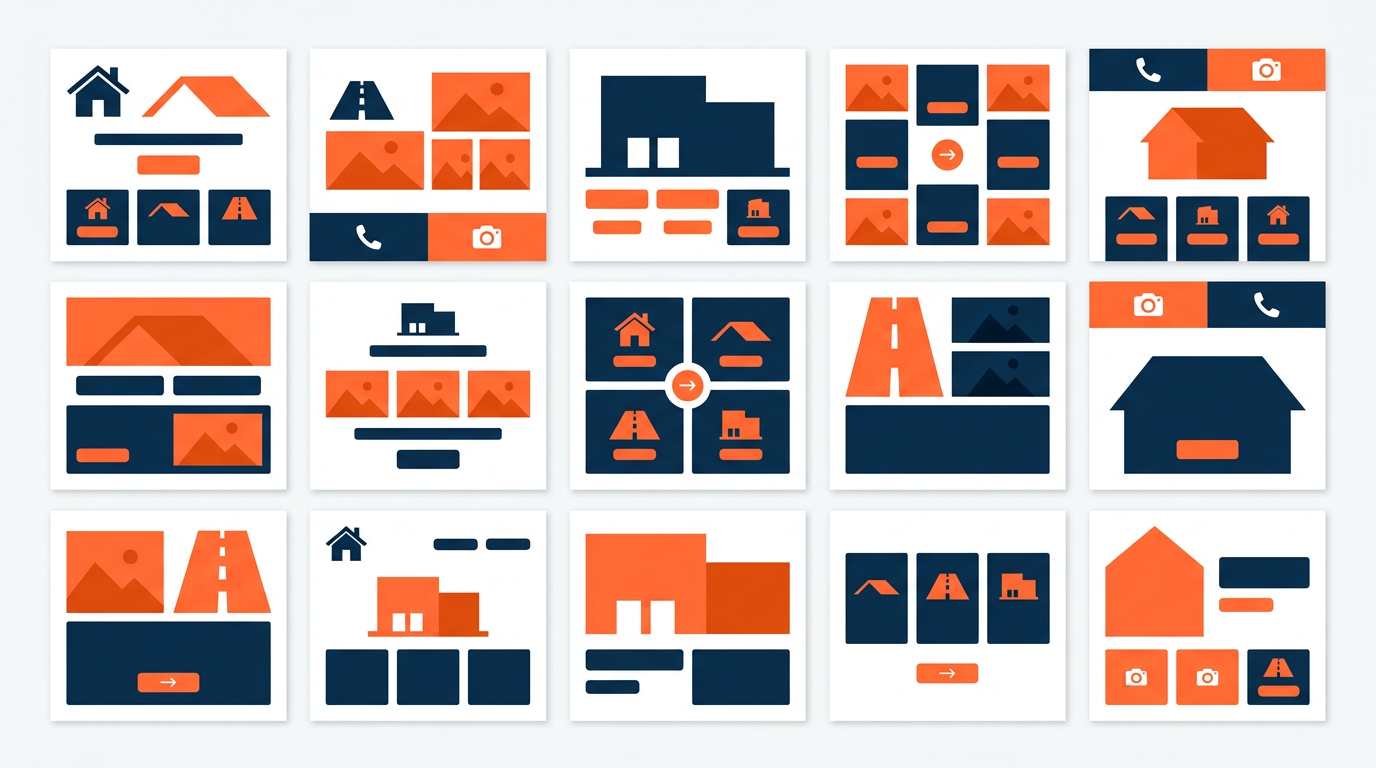
Examples 1 through 5 build a strong residential foundation
These five formats work best when you need homeowners to understand and trust your company quickly. They keep the sales path simple and put proof close to the quote action.
1. The local one-page site
This format puts the headline, services, coverage area, photos, reviews, and contact form on one scrolling page. It works well for a new operator serving a tight area with a short service list.
Use a headline such as house washing in your city, followed by a plain explanation of the work. Add a sticky call or quote button on mobile, then repeat the same action after the proof section.
2. The house-wash specialist
This example leads with one money service instead of listing every task you could perform. It can explain siding types, the cleaning approach, what is included, and nearby areas served.
Specialization makes the message easy to follow. If house washing is your lead offer, support it with a focused service page and a clear estimate process. Your rates can stay internal, but they should be consistent with your house washing pricing process.
3. The service-card homepage
This layout uses clear cards for house washing, concrete cleaning, roof washing, gutters, and other core work. Each card gets a short description, a relevant image, and a link to a full page.
Keep the card count controlled. Do not give minor add-ons the same visual weight as the work that pays your bills.
4. The before-and-after portfolio
This example lets actual work carry the page. Group projects by surface, explain the problem and scope briefly, then place a quote button beside the result.
Use matched angles, consistent lighting when possible, and uncluttered framing. The guide to pressure washing before and after photos covers how to capture useful proof without leaning on fake-looking edits.
5. The review-led homepage
This format places recent, relevant customer feedback near service details and quote buttons. The layout works because prospects can see both the promise and supporting proof together.
BrightLocal's 2026 Local Consumer Review Survey found that 97 percent of consumers read online reviews for local businesses. It also found that 68 percent would only use a business with four or more stars, while 85 percent said positive reviews made them more likely to use a business.
Do not bury reviews on a forgotten page. Use short excerpts where they support a service claim, while making sure the presentation remains accurate.
Examples 6 through 10 shorten the path from visit to quote
These formats work when visitors already know they need cleaning and want the next step. Each one reduces friction around calling, getting an estimate, or choosing a specific service.
6. The instant-estimate funnel
This example starts with a short form asking for contact information, property location, service, and basic scope. It works best when your pricing process can handle incomplete measurements without creating bad expectations.
Do not turn the form into an interrogation. Gather enough information to qualify the request, then confirm measurements and conditions before giving a final number. A pressure washing pricing calculator can help you build consistent rates behind that form.
7. The call-first mobile site
This layout treats the phone call as the main conversion. A tap-to-call button stays visible, business hours are easy to find, and the contact form remains available for people who cannot talk.
The design must work one-handed on a small screen. Use large buttons, short paragraphs, and no pop-up that blocks the first view.
8. The multi-service residential site
This example creates separate pages for each important service, all connected through a simple homepage. The structure gives homeowners specific answers without stuffing everything into one long block.
Every page should explain the surface, method, likely limitations, service area, and next step. Do not duplicate the same paragraph across every page and merely swap the service name.
9. The roof soft-wash specialist
This format clearly distinguishes roof treatment from high-pressure surface cleaning. It explains what the operator does, what property access may involve, and how the estimate gets confirmed.
That distinction helps prevent confusion before the customer calls. If roofs are a primary service, connect the sales page to a sound roof soft washing pricing method.
10. The driveway and concrete specialist
This example leads with hard-surface work and shows driveways, sidewalks, patios, and similar areas. Strong pages explain what the base cleaning includes and which items, such as sealing, are separate.
Photos should show the whole cleaned area, not only a tight wand stripe. The page also needs enough scope detail to keep a small walkway inquiry from sounding identical to a large concrete job.
Examples 11 through 15 support larger accounts and search growth
These five formats fit contractors building beyond basic residential leads. They give commercial buyers, multi-city prospects, and search visitors information matched to their intent.
11. The commercial capability site
This example organizes work by property type and service need. It should explain scheduling, site assessment, access, quoting, and how a buyer starts the conversation.
Avoid vague claims about handling every possible facility. Show the types of properties and surfaces you actually pursue, then use a dedicated commercial estimate form.
12. The property-manager landing page
This page speaks directly to people coordinating recurring or multi-property work. It focuses on communication, service scope, scheduling needs, and one contact path.
Keep homeowner language off this page. A property manager wants to know whether you understand the account, not whether one driveway can look cleaner.
13. The city-page service-area site
This structure pairs substantial service pages with useful location pages for markets you truly serve. Each city page should contain local coverage details and relevant work, not a copied paragraph with a different place name.
Search visibility takes more than publishing dozens of thin pages. Backlinko's analysis of four million search results found that the top three Google results received 54.4 percent of clicks, while only 0.63 percent of searchers clicked a second-page result. Use the full pressure washing SEO guide before expanding the page count.
14. The educational authority site
This example publishes direct answers about surfaces, methods, preparation, pricing factors, and maintenance. Each article should guide the right reader toward a related service instead of existing only to fill a blog.
Backlinko also found that four-word search keywords had the highest click-through rate at 31.8 percent. That supports writing around specific customer questions rather than broad, vague topics.
15. The seasonal campaign landing page
This format supports one service, audience, or advertising campaign with one focused page. The headline, photos, offer details, and form should all match the same reason the visitor clicked.
Remove unrelated menu choices when they distract from the action. Keep the company identity and contact information clear, but do not send paid traffic into a general homepage maze.
Your service mix and market move the website decision
The right website becomes larger and more specialized as your offers, coverage area, and lead sources expand. A new operator needs a dependable lead path, while a multi-crew business may need separate paths for homeowners, commercial buyers, and different cities.
Your core service mix is the first price and scope driver. One-page sites can support a narrow residential offer, but separate roof, house, concrete, and commercial pages require more writing, images, forms, and navigation.
Your market footprint is another driver. One town may need a strong homepage and service pages. Several distinct markets may justify carefully built location pages, provided you truly work there and can supply useful local details.
Photo readiness affects the project, too. A site with organized original images is easier to build than one waiting on job photos, service descriptions, and proof. Gather those materials before design starts.
Lead source changes the layout. Search traffic needs pages that answer specific questions, while paid campaigns need focused landing pages. Referral traffic may arrive ready to verify your reputation and contact information.
Your Google presence should support the website instead of competing with it. Google says customers are 2.7 times more likely to consider a business reputable when they find a complete Business Profile on Search and Maps. Use the official Google Business Profile page, then follow a contractor-focused Google Business Profile setup process.
Finally, decide who will maintain everything. Every added service page, city page, form, plug-in, and gallery creates another item to update. Build the smallest site that can fully support your current sales plan.
Choose one website format for your current situation
Choose the simplest format that covers how you sell today and where you plan to grow next. Do not pay for a complex structure you cannot supply with good photos, useful copy, and ongoing maintenance.
Choose a local one-page site if you are starting out. Lead with one main service, one real coverage area, and one quote action. Add pages only after you have enough work and material to make them useful.
Choose a service-card site if you sell several residential services. Give major services their own pages, but keep the homepage focused on routing visitors rather than explaining every detail.
Choose a portfolio or review-led site if proof is your advantage. Put original job photos and relevant feedback beside the services they support. Make sure the customer can request a quote without leaving the proof section.
Choose an estimate funnel if your sales process is already consistent. Define what the form collects, who answers it, and how quickly your team follows up. Software does not fix a loose quoting process.
Choose a city-page site if you actively serve several markets. Build each page for a real location and connect it to the right service pages. Avoid mass-producing weak location pages.
Choose a commercial capability site if B2B accounts are the target. Organize the message around property types, scope, scheduling, and contact responsibility. Residential slogans will not do that job.
Before signing a build agreement, compare the scope with pressure washing website cost. Look at page count, writing, image preparation, mobile testing, forms, hosting, maintenance, and ownership.
If you want a contractor-focused build instead of assembling these pieces yourself, get a WasherAuthority website. Bring your service list, coverage area, best project photos, and preferred quote process to the first conversation.
Audit every website example with the same eight checks
A good-looking example is only useful when it passes a working contractor's audit. Test it on your phone, follow the quote path, and judge whether every major section helps the visitor make a decision.
1. Check the first screen. It should state the primary service, service area, and next action without requiring a scroll.
2. Check mobile navigation. Buttons should be easy to tap, the phone number should work, and no banner should cover the content.
3. Check speed. Compress images and remove decorative features that delay the useful page. Portent's study of more than 100 million page views linked a one-second load time with three times the conversion rate of a five-second load time.
4. Check service clarity. Each important service should have a plain explanation of what you clean and how the estimate begins.
5. Check geographic clarity. Name the places you actually serve. Do not make a homeowner guess whether the address is inside your route.
6. Check proof quality. Use real work, readable review excerpts, and accurate claims. Stock photos cannot show how your crew handles local properties.
7. Check the quote form. Submit a test lead yourself. Confirm that the message arrives, the confirmation works, and the required fields make sense on a phone.
8. Check search visibility. Connect the site to Google Search Console so you can inspect indexing and website performance in Google. A published page is not automatically a page that gets found.
Run this audit before launch, after major updates, and whenever leads suddenly weaken. It catches practical problems that a desktop design preview can hide.
Frequently asked questions
Should a new pressure washing business use a one-page website?
Yes, when the business has a tight service list and small coverage area. The page still needs clear services, real proof, local details, and a working quote action.
How many pages should a pressure washing website have?
Use enough pages to explain each major service and real market without repetition. A focused small site is better than dozens of thin service or city pages.
Should pressure washing prices appear on the website?
They can, but only when your pricing rules and minimums are consistent. Many operators explain pricing factors or starting points, then confirm measurements and site conditions before issuing a final quote.
What photos work best on a pressure washing website?
Use original wide job shots, matched before-and-after angles, equipment-in-context images, and surface-specific results. Avoid stock images that cannot prove your work.
Is a Google Business Profile enough without a website?
A Business Profile helps customers find and evaluate you locally, while your website gives you more room to explain services, show projects, and capture leads. The two should support each other.
Need a website that turns these searches into calls?
We build done-for-you sites for pressure washing contractors. A one time build fee, then $29/month for hosting, your domain, backups and unlimited edits.
Get Your Free Mockup