
The short answer
Set residential gutter cleaning prices with a $150 minimum, then account for gutter length, story count, debris, access, and disposal. A practical starting range is $1.00 to $2.00 per linear foot for interior cleaning. Price exterior gutter brightening separately at $1.00 to $1.50 per linear foot. Charge more for second-story work, packed debris, gutter guards, difficult ladder placement, and downspout flushing. Never bury brightening inside a basic cleaning quote.
Key takeaways
- Start gutter cleaning around $1.00 to $2.00 per linear foot, subject to access and debris.
- Use a $150 minimum to cover travel, setup, cleanup, and payment time.
- Charge $1.00 to $1.50 per linear foot for exterior gutter brightening.
- Quote gutter guards, downspout clearing, and debris hauling as separate line items.
- Confirm whether the customer wants interior cleaning, exterior washing, or true brightening.
What are practical gutter cleaning prices?
A practical residential starting point is $1.00 to $2.00 per linear foot for open-gutter cleaning, with a $150 minimum. Exterior gutter brightening generally runs $1.00 to $1.50 per linear foot and should appear as a separate service.
These are working ranges, not fixed rules. Your final number needs to reflect how long the job will take, how safely you can reach the gutters, and what the customer expects when you leave.
Interior gutter cleaning means removing leaves, roof grit, mud, and other loose material from the trough. It may include checking or flushing downspouts if that work is written into the quote.
Exterior gutter washing removes loose dirt and organic buildup from the visible face. Brightening is a more detailed chemical cleaning intended to address stubborn discoloration on the gutter face. Washing and brightening are not interchangeable.
Use the table as a quoting framework, then adjust for conditions found during inspection. Enter your production assumptions into the Pressure Washing Pricing Calculator before turning any range into a permanent rate.
| Service | Working price | Typical scope |
|---|---|---|
| Open-gutter interior cleaning | $1.00 to $2.00 per linear ft | Remove loose debris and bag it |
| Exterior gutter brightening | $1.00 to $1.50 per linear ft | Treat and clean visible gutter faces |
| Basic downspout flush | $15 to $30 each | Flush an accessible downspout |
| Clogged downspout clearing | $30 to $75 each | Work a confirmed blockage |
| Gutter guard removal and reset | $0.75 to $1.50 per linear ft | Remove accessible guards and reinstall them |
| Debris haul-off | $25 to $75 per job | Remove bagged gutter debris from the property |
| Minimum service charge | $150 | Covers a small standalone visit |
Gutter cleaning and gutter brightening are different jobs
Price gutter cleaning and brightening separately because they solve different problems and require different labor. A customer asking to have gutters cleaned may only mean removing leaves from inside the trough.
Your estimate should divide the work into clear line items. Use terms such as interior debris removal, downspout flush, exterior gutter wash, and exterior gutter brightening.
That wording prevents a common argument. The customer sees an empty gutter but still notices dark streaks on the front, while you believed the job only covered debris removal.
Brightening deserves its own $1.00 to $1.50 per linear foot rate. It adds chemical handling, dwell time, agitation where needed, rinsing, and closer inspection. Oxidized or aged surfaces may not return to a uniform finish, so set expectations before starting.
Do not promise restoration without testing a small area. Note pre-existing oxidation, failing paint, loose fasteners, and damaged seams in the estimate. Photographs can support that record, and How to Take Pressure Washing Before and After Photos That Sell Jobs explains how to capture useful angles.
Brightening also pairs naturally with siding work. When quoting both, compare the added labor against your normal rates in How Much to Charge for House Washing. Keep the gutter line visible rather than hiding it inside the house-wash price.
| Customer request | What the quote should include | What it should not imply |
|---|---|---|
| Clean out the gutters | Interior debris removal | Exterior stain removal |
| Flush the gutters | Water flow check and listed downspouts | Clearing every concealed blockage |
| Wash the gutter faces | Removal of loose exterior dirt | Correction of oxidation |
| Brighten the gutters | Chemical cleaning of visible faces | A guaranteed like-new finish |
What moves a gutter cleaning price up or down?
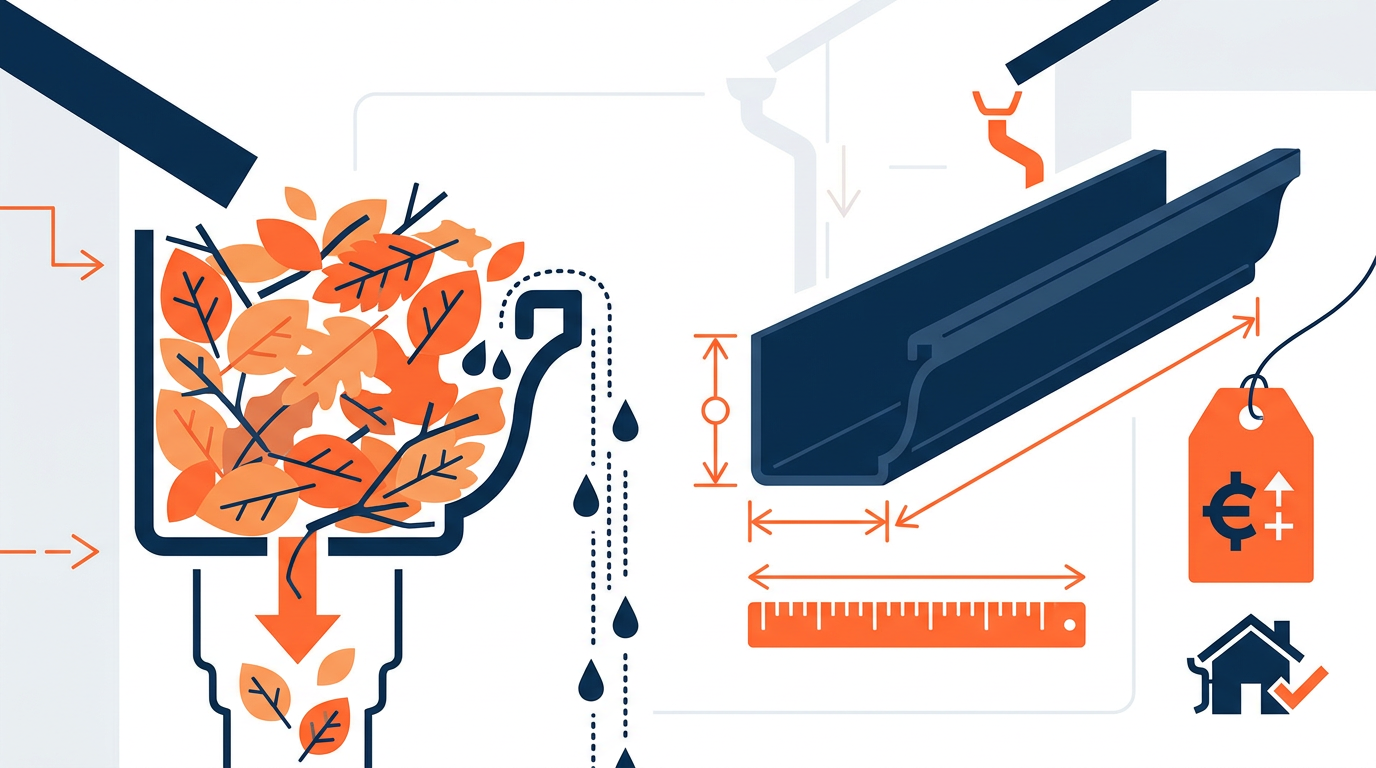
Height, debris, access, gutter guards, roof conditions, and downspout blockages move the price most. Linear footage gives you a base, but these conditions determine whether that base makes money.
Story count: Second-story gutters require more setup, repositioning, and care than reachable first-story runs. A practical adjustment is about 25 percent above comparable first-story work, then more if access remains difficult.
Debris condition: Dry leaves are faster than packed mud, roof grit, roots, or long-neglected organic material. Heavy debris also creates more bagging and disposal work.
Gutter guards: Screens and covers can turn one pass into removal, cleaning, and reinstallation. Identify the guard type before quoting because some systems are not practical to disturb during routine cleaning.
Ladder placement: Slopes, landscaping, fences, pools, decks, narrow side yards, and overhead obstacles can reduce production. If you cannot place equipment efficiently, increase labor rather than pretending every foot costs the same.
Roof pitch and surface: Decide before the job whether your process requires roof access. Do not build a price around walking a roof until you have assessed its pitch, condition, and workable access.
Downspouts: A quick flow check is different from dismantling elbows or working a packed blockage. State how many downspouts your base scope includes, then list confirmed clogs separately.
Cleanup: Bagging debris onsite is not the same as hauling it away. Spell out whether bags stay in the customer's trash area or leave in your truck.
Worker safety has to be part of the estimate, especially where ladders and elevated work are involved. Use OSHA) as a safety reference when building job procedures and training workers.
Insurance overhead belongs in your rates too. Insureon reports average annual costs of $895 for general liability and $1,601 for workers compensation among pressure washing companies. Those averages are not quotes for your company, but they show why labor rates cannot be based only on time at the gutter.

A $150 minimum keeps small gutter jobs worth the trip
Use a $150 minimum for a standalone residential gutter cleaning visit, then raise it when your travel or setup demands more. A small house still requires scheduling, driving, unloading, inspection, cleanup, invoicing, and payment processing.
Without a minimum, a 60-foot gutter run priced only at $1.25 per foot produces a $75 ticket. That may cover visible cleaning time, but it ignores the rest of the appointment.
State the minimum before asking the customer to send photos or schedule an estimate. Clear wording saves both sides time: “Our standalone gutter cleaning minimum is $150, subject to access and condition.”
You can also use the minimum as a service credit. For example, the first $150 covers the visit and a defined amount of straightforward work. Added footage, guards, clogs, and brightening are charged from the written schedule.
Bundling can make a small gutter job easier to sell without discounting your labor. Offer cleaning with a house wash, roof treatment, or concrete cleaning when the property needs it. Review How Much to Charge for Roof Soft Washing and How Much to Charge for Driveway and Concrete Cleaning before building package prices.
Do not waive the minimum merely because a job is near another stop. Route density helps your margin, but the customer is still buying a professional service visit.
How do you measure and quote gutters accurately?
Measure the actual gutter runs, identify each story, and confirm access before applying a rate. Do not price from total house perimeter unless gutters truly run around the whole structure.
Start with satellite views, listing photos, or customer photos for a rough measurement. Treat that number as preliminary because porches, garages, additions, and missing gutter sections can make perimeter estimates wrong.
Ask the customer for one photo of every side, plus close views of gutter guards and problem downspouts. Request enough distance in each image to see grade, fences, shrubs, decks, and ladder placement.
Then build the quote in this order:
- Record estimated linear feet by first and second story.
- Apply your base cleaning rate to each group.
- Add gutter guard labor where visible.
- List downspout flushing or clearing by count.
- Add brightening as a separate linear-foot service.
- Add haul-off when the customer wants debris removed.
- Apply the service minimum and round to a clean quote total.
Include a condition clause allowing revision if onsite conditions differ materially from supplied photos. Tell the customer before work begins if a change is needed.
Flat-rate presentation often works better for homeowners even when your estimate begins with linear feet. Per Square Foot vs Flat Rate Pricing for Pressure Washing shows how to use production-based math behind a simple customer-facing total.
Your gutter rate must cover more than ladder time
Build your rate from total job time, direct costs, overhead, and target profit, not from what feels cheap enough to win. Count the appointment from route time through final payment, not only the minutes spent removing debris.
Estimate loading, travel, site discussion, access setup, ladder moves, cleaning, flushing, bagging, ground cleanup, photographs, invoicing, and equipment reset. Add chemical cost for brightening and disposal time when debris leaves with you.
Next, account for overhead such as insurance, vehicle costs, equipment replacement, software, advertising, and nonbillable office time. Your per-foot number should recover those costs across the realistic amount of work you can complete.
Track estimated feet, estimated hours, actual hours, crew size, and add-ons for every job. After several similar jobs, compare your expected production against actual production and adjust the rate or scope.
Avoid copying another operator's gutter price without knowing the scope. One quote may cover open first-story gutters with debris left onsite. Another may include guards, downspouts, second-story access, cleanup, and haul-off.
Price shoppers also need enough detail to compare your offer correctly. A simple services page should define cleaning, washing, and brightening, show safe work practices, and explain the minimum. If you need a site built around clear service scopes, Get a WasherAuthority website is the next step.
A written scope prevents most gutter pricing disputes
Your quote should state the measured footage, included work, exclusions, access assumptions, and total price. A one-line estimate reading “gutter cleaning” leaves too much room for different expectations.
Use a scope similar to this:
Interior gutter cleaning: Remove loose debris from approximately 140 linear feet of accessible open gutters. Bag debris and place bags in the customer's designated trash area.
Downspouts: Flush four accessible downspouts. Concealed blockages, disassembly, repairs, and underground drain clearing are excluded unless added in writing.
Exterior brightening: Chemically clean approximately 110 linear feet of visible gutter face. Final appearance depends on existing oxidation, coating condition, and permanent surface damage.
Access: Quote assumes stable ladder placement from normal ground surfaces shown in customer photographs. Price may change before work starts if access or conditions differ.
Exclusions: Gutter repair, guard replacement, roof repair, underground drainage work, and paint restoration are not included.
Price: Show each service as a line item, followed by one total. That lets the customer remove brightening without reopening your cleaning math.
Do not diagnose repairs you do not perform. Photograph loose sections or visible damage, notify the customer, and keep your service scope focused on cleaning.
Good quote records also improve future estimates. Save footage, access notes, guard type, downspout count, and actual job time so the next visit starts with useful information rather than another guess.
Frequently asked questions
Should gutter cleaning be priced by linear foot or as a flat rate?
Use linear feet to calculate the job, then present a flat total. Adjust that total for height, debris, guards, downspouts, access, and your minimum.
How much should gutter brightening cost?
A practical working range is $1.00 to $1.50 per linear foot. Keep it separate from interior cleaning and basic exterior washing.
Should downspout flushing be included?
You can include a basic flow check or a stated number of accessible flushes. Price confirmed clogs, disassembly, and underground drainage work separately.
How much more should second-story gutter cleaning cost?
Start around 25 percent above comparable first-story work, then adjust further for poor access, repeated ladder moves, steep grades, and heavy debris.
Do gutter guards increase the cleaning price?
Yes. Charge separately when guards must be removed and reset. A working range is $0.75 to $1.50 per linear foot, depending on the system and access.
Need a website that turns these searches into calls?
We build done-for-you sites for pressure washing contractors. A one time build fee, then $29/month for hosting, your domain, backups and unlimited edits.
Get Your Free Mockup